

Disclosure: I only recommend products/services I would use myself and feel might benefit you as well. This post contains affiliate links, and I may earn a commission at no extra cost to you. As an Amazon Associate I earn from qualifying purchases.
“The word ‘change’ means money and time,” is a sentiment that my mom has reminded me of throughout my home building process based on her experiences building her homes. This advice has stuck with me throughout the process; so, when I had to execute the final sign-off on all my plans and decisions (down to the color of grout and direction of tile) back in February before ground had even broken on the house, you can imagine how anxiety-inducing that was.
Now I am at the point in my home building process that drywall and exterior siding are going up, and the journey to get to this point has taught me many lessons about perfection.
Perfection may be out of your control
On approximately Day 2 of ground having been broken to dig the foundation for my house, I got a call from the builder I had chosen asking me if I could meet him at the site. Uh oh… that didn’t sound promising.
Upon arrival, we could see the issue he was referring to. There had a been a miscommunication in the blueprints between another contractor that had drawn up some parts of the plans and the builders. So now I had to decide if I wanted more stairs in my garage or more slope in my driveway. I wasn’t thrilled about the idea of either but sacrificed slope in the driveway. Turns out that I now don’t even realize the slope is any different than it was supposed to be.
Despite my best efforts to have perfection throughout the process, that was pretty much blown on Day 2 of construction. And it wasn’t even my fault!
Which brings us to the first powerful lesson: Perfection in a situation may be out of your control.
This isn’t just true in construction but is true in life in general. Work projects, vacation plans, and whatever other circumstances in your life that have dependencies on other people/entities are also prone to not being perfect for that exact reason; you’d have to expect perfection from other people, which I’ve come to realize is an unreasonable and unfair expectation. While it is ultimately up to you to take accountability and responsibility for how you respond to and move forward with situations, you can’t always control all the outcomes.
Consequences are likely smaller than they appear
When I began the house process, I thought that the dreaded word of “change” would end up costing tens or hundreds of thousands of dollars extra if I acted upon that. Sure, that could’ve been true if I decided to make major last minute changes, but generally speaking, this expectation I had of what would happen was blown way out of proportion in my head.
Again, very early on in the process, I realized after the gravel was put down for my driveway that I didn’t like how narrow the end of it was and was worried about guests pulling out, especially with hills on both sides of the street. My mom advised that I make it wider, and I insisted that I couldn’t because everything had been signed off on, I didn’t want to pay more money, and I didn’t want to have to start a new time-consuming process. She encouraged me to just ask the question.
When I asked the builder, they stated that they would look into this make sure it would still align with all the needs of the plan and get back to me. Within the hour, they stated that this could be done fairly easily. It was done the next day and, to be honest, if there was any extra cost, I didn’t even notice it. Oh… not what I was expecting.
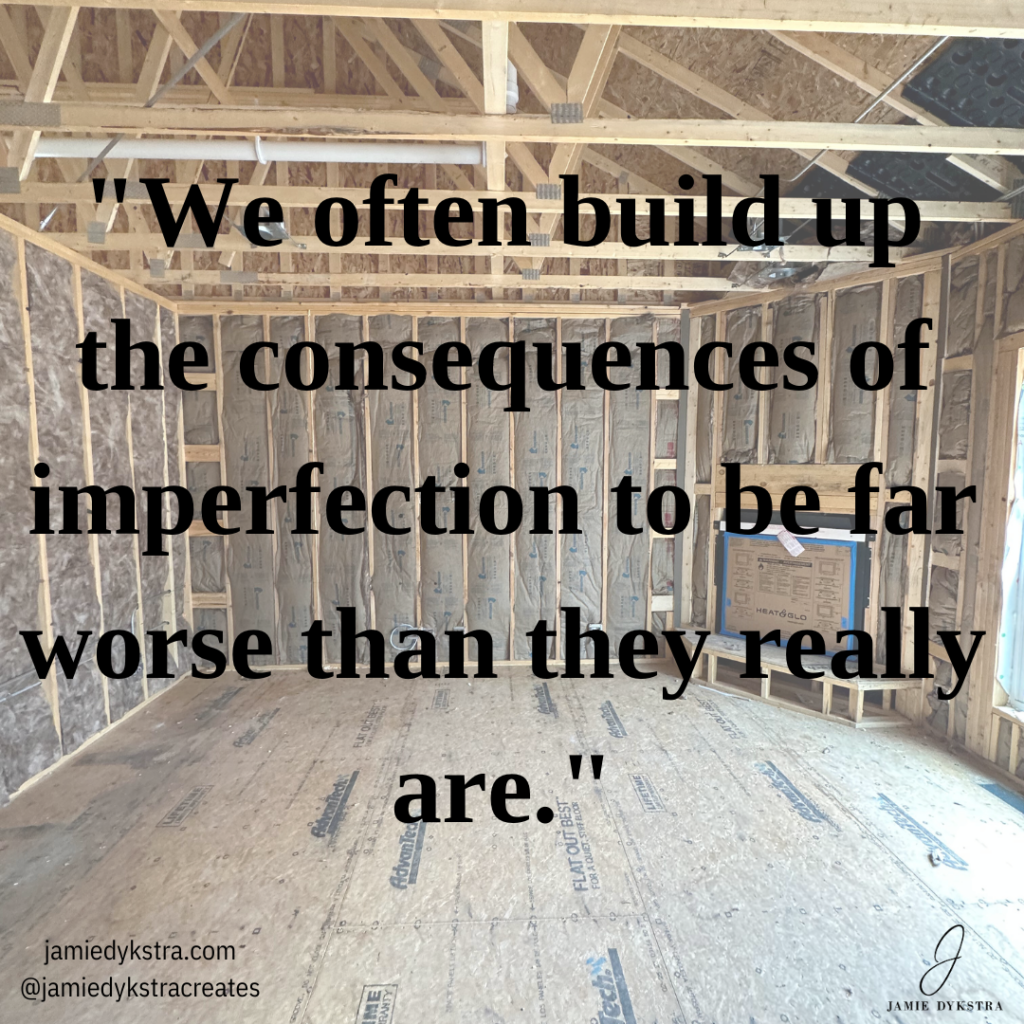
Which bring us to our second powerful lesson: We often build up the consequences of imperfection to be far worse than they really are.
I realized that what my mom was trying to impress upon me was not that I had to be perfect, but that I couldn’t be making willy nilly decisions all throughout the process. Even she has suggested some changes and additions along the way.
In life, I find that we often build up the consequences of a situation in our head to be so dire that the stress of potentially having to deal with those consequences far exceeds what the actual outcome is, if it even comes to fruition!
I’ve often seen quotes about not worrying about the future because you either have to worry about the circumstance twice (once anticipating it and once going through it) or your worry causes you to live through the stress of it when you may not have had to live through it anyways. I always find that sentiment to resonate with me, and while I still have a long way to go on acting consistently on that, the home building process has been a great reminder and example of this.
The outcome may be better than the plan
More recently, we’ve made a couple of changes and additions to the electrical plan before the drywall goes up. Some of these have even come at the suggestion of the builder themselves. While these changes don’t align with the original goal that I had of perfection (i.e. no changes) throughout the process, I’m so grateful for the changes because they will make a huge long-term difference in the house for nominal cost and work. Not having an extra canned light in the hall from my bedroom to my bathroom would’ve been a glaring miss but adding this in during the install of the electrical made a world of difference.
Sometimes we think we know best about a situation, especially when it is something that we’re claiming ownership of, like our very own home or a passion project at work to name a couple. However, sometimes there are others around us that have more experience, varied viewpoints, or different areas of expertise from us that can provide positive challenges and changes. This has been very evident to me throughout my home building process.
More so than just other people, in the journey of life we often feel we know exactly how we want to carve our path and what that would look like, when ultimately God knows what’s best for us and will decide how that path ends up looking. We’re not omniscient or omnipotent so we can’t possibly know all the reasons and insights, but we can trust that God has a plan for us that is better than the plan we had made for ourselves, even if it’s not immediately evident on the surface.
Which brings us to our third powerful lesson: Many times the “imperfect” results are better than we could’ve imagined.
The Seed (links to hardcover and Kindle) by Jon Gordon is a beautifully written example of how we can utilize our faith in our own journey to carve a purposeful path for ourselves.
Next time you are starting to feel the pressure of perfection weighing you down remember the three principles we’ve discussed here, take a breath, and have faith that everything will work out just as it’s supposed to.
Some tangible action items to add into your routine are practicing mindfulness as well as being messy with trying things in your own life to diminish the stress that comes from hoping that everyone is perfect for you to achieve perfection. Practicing mindfulness through activities like prayer, meditation, and journaling will help you to better react to the situation. Trying new or uncomfortable things in your own life, even if they’re messy, will allow you to gain confidence in what can happen even when there isn’t perfection.
If you’re interested in your own transformational journey, reach out to me using the button below to book your free discovery session to see if I can support you along your journey to unlock the full potential of joy, freedom, and strength within your life.
Disclosure: I only recommend products/services I would use myself and feel might benefit you as well. This post contains affiliate links, and I may earn a commission at no extra cost to you. As an Amazon Associate I earn from qualifying purchases.
Disclaimer: This blog should not be construed as providing, or intending to provide, professional financial, legal, psychological, or other professional advice. It is simply meant to share my experiences for those that may find them relatable and helpful.