

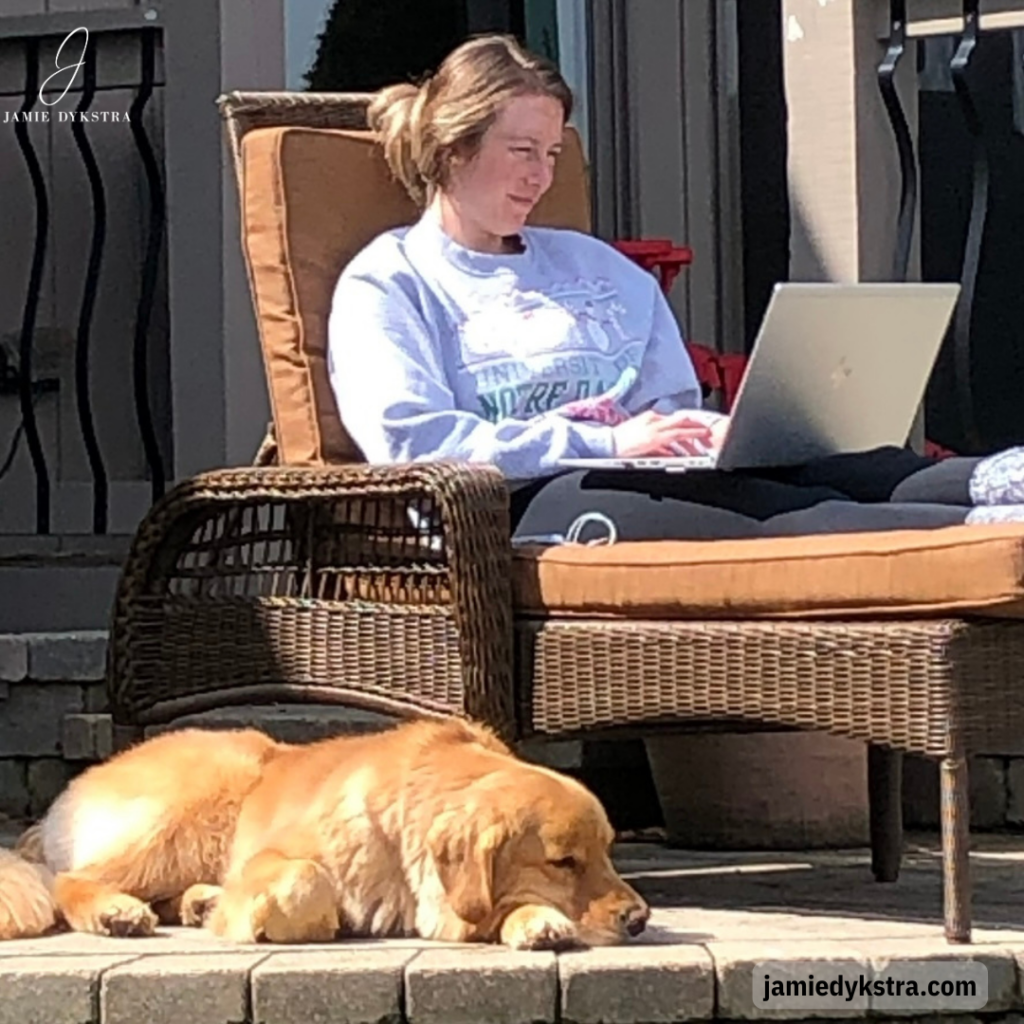
I think it’s common for folks to have a romanticized view of the writer’s lifestyle. That we simply write when the inspiration strikes. That we have a moment of clarity, get in a flow state, sit down at the keyboard, and let it fly.
Yes, that definitely does happen… at times. But for a professional ghostwriter, that’s often not the norm. Rather than waiting to work on the whim of a creative strike, we’re driven by the stewardship of our clients’ stories and teachings.
We’ve committed to get their project done. To bring their vision to life.
We need to run on discipline and figure out how to weave creativity into that. Not the other way around. Let me take you behind the curtain of the less whimsical days of a ghostwriter.
Routine
If you’re serious about writing, to the point that it’s your career, it’s important to create a routine to stay on track. Writing simply when we wait for creativity to strike isn’t going to cut it. Developing a writing routine is key, and it’s two-fold.
The first aspect of this routine is developing a daily routine around your writing. Some people, like me, are most focused, creative, and fresh in the morning. Some people feel most energized at night. And sometimes, the schedule needs to revolve around other aspects of life.
Whatever the case may be for you, being disciplined in your writing means developing a daily routine that you can stick to in order to get the writing done. This helps to keep momentum and steady progress.
Creating a daily routine should also feel good. For my daily routine, I write in the morning. That’s when I feel most focused and creative, and it makes me feel good for the rest of the day. I generally don’t write in the afternoons. I know I’m less efficient and creative then. Can I write if needed? Sure. But I generally don’t because I feel the quality and productivity aren’t there. Discipline doesn’t need to mean pushing through resistance every day; it just means being consistent.
The second part of the routine is figuring out your writing routine. As a ghostwriter, I have a routine that I work through in my books. I take it chapter by chapter, and within each chapter, I have a routine. I typically spend a day outlining, one to three days writing (generally), and a day editing.
With both these routines in place, I have a path to maintaining traction even on the days where I’m simply feeling “blah”.
Words on Paper
Half the battle of writing is actually getting the words on the paper.
We often don’t get it right the first time. After we write, we review and edit, and often repeat that process again.
But the first step is actually getting the words on the page. Nothing else can happen without that. And of course, we want our first pass at this to be as good as possible, but no matter how stunning our first pass is, it will still need to be reviewed and edited.
When we have the discipline to get the words out, we can refine the work and improve it later. But if we’re constantly waiting until we feel in the right headspace to do this, we often prolong the opportunity to even start and see where it takes us.
Discipline Leads to Inspiration
It may sound counterintuitive, but discipline can lead to inspiration.
As a ghostwriter, if I wait for creative inspiration to strike, chances are that I’m going to get wayyyy behind on my projects. That’s going to lead me to feel overwhelmed. And feeling overwhelmed is going to stifle my creativity while adding unnecessary stress.
Being disciplined and having a routine leads to various creative outcomes.
First, when we stay on track as writers, we often feel lighter and more empowered. This creates a higher probability for those moments of inspiration to strike. When we’re operating in a zone of higher energy emotions, we are more likely to allow similar thoughts to enter our mind.
Furthermore, working within a routine takes off a huge mental load. Each day, I know the time I’m writing at, what I’m writing about, and how much I want to write before I even get started. This frees up more mental capacity for me to focus on other things like ideas that are pertinent to the manuscript or client that can lead to truly inspired thoughts.
Being a professional writer is so fulfilling, but sometimes, it requires the perseverance to just sit down and do the thing. That being said, I recognize that there will be days when we truly aren’t in a spot to write, and on those days, we need to give ourselves grace. But when we have a routine, we create an environment where it’s easy for us to maintain momentum.
Want to write a book but need to devote your discipline elsewhere? I can help with that! Schedule a free strategy session so we can talk about getting your “why” out into the world!
Disclaimer: This blog should not be construed as providing, or intending to provide professional financial, legal, psychological, or other professional advice. It is simply meant to share my experiences with those who may find them relatable and helpful.