

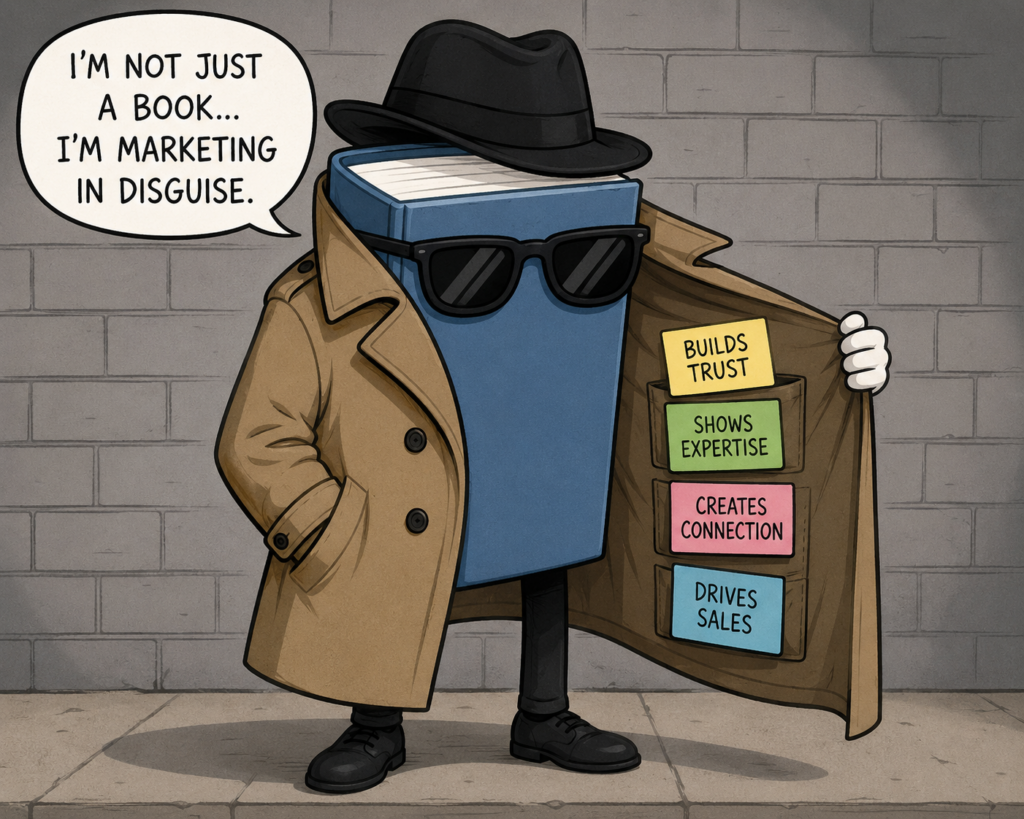
Books are like undercover marketing.
They are great for building your brand, bolstering your credibility, generating leads, and more, but they don’t come across as a typical marketing tool. In fact, that’s what makes them so powerful.
Most authors decide they want to write a book because they want to make an impact. There are many other marketing mechanisms that take less time, energy, and investment. But an author is intentionally using a book as a tool because they don’t just want to market, they want to help others along the way.
Books are a long-term play, not a quick cash grab.
Let’s dive into how books end up marketing you without feeling salesy.
Books Add Value
The primary purpose of a book is to add value. Even if you decided to write a book to build your brand or expand your business, it also has the dual purpose of adding value. Without this foundational element, a book will just be a really long sales pitch.
When an author writes a book, they aim to teach others. To share experiences. To impart insights. To help readers feel seen. To inspire them.
When you write a book, you aren’t focusing on you. You’re focusing on the reader and how you can help them. You want to positively impact them. This could be through teaching them frameworks, shifting their mindset, or inspiring them through your journey.
By genuinely striving to add value for the reader, you will also naturally end up marketing yourself because readers who resonate with what you’re sharing will want more. They’ll want to follow your content, purchase your services, sign up for workshops, etc.
A Book is Vulnerable
Part of this genuine sharing is allowing yourself to be vulnerable. A book shouldn’t be 200 pages of telling people how amazing you and the work you do is. Your book should reflect the essence of you. This includes both the triumphs and the “if I could go back and do it again” moments. Both of these experiences are moments of teaching.
And by being vulnerable, the reader is better able to relate to both you as an author and what you’re teaching. They can see themselves in the stories. They can tie them back to their own lives. No one is perfect, and readers don’t expect you to be perfect as an author.
Because books almost always have even just a little bit of vulnerability in them, they stray from what is viewed as typical marketing. It isn’t selling. It’s relating. And by sharing this way with the reader, you’re building a relationship, not simply entering into a transaction. The reader begins to trust you without you even sitting there.
The Dream of a Book
For most people, writing a book is on their bucket list. It’s a dream of theirs.
So when they accomplish this feat and launch the book, people within their network are happy for them and support them. When the book launches, the author’s community has the opportunity to rally around something.
They are supporting the mission of the author. They are standing behind the relationship they have with the author. They are sharing the message and spreading the word. This happens organically because of what it takes to actually write and publish a book.
This is often a much more significant response than what happens as a result of typical marketing. Of course, there will be loyal friends and followers who will share typical marketing. But there will be many more that scroll right past it as we all get bombarded with daily content, ads, and other media.
Books are unique because they are the essence of the author. They are impactful. They add value. They have a greater purpose. And through this, they build trust and credibility, which creates relationships with readers and customers.
Interested in pursuing this “undercover” marketing? Request a book consult using the button below!
Disclaimer: This blog should not be construed as providing, or intending to provide professional financial, legal, psychological, or other professional advice. It is simply meant to share my experiences with those who may find them relatable and helpful.