
I’ve said it once and I’ll say it again: EVERY CAREER EXPERIENCE ADDS UP!
When I worked in corporate, I took a lot of meeting minutes. It came with the territory of being the project manager or the junior person in the room. A lot of people loathe taking meeting minutes. While it wasn’t always my favorite thing to do, I really didn’t mind it because I enjoyed writing and gained new opportunities.
I will be the first to admit that I delegated meeting minutes whenever I had the chance because my plate was always full with other items. But as I’ve journeyed down the ghostwriting path, I’ve seen how valuable the experience of taking meeting minutes was for the exact career I’m in right now (so much so that I’ve even gotten deja vu a few times).
If something as mundane as taking meeting minutes can be a strong foundation for a new career down the road, just imagine what other past career experiences may help you to achieve your dreams.
I’ll prove it to you by showing how taking meeting minutes has made me a better ghostwriter.
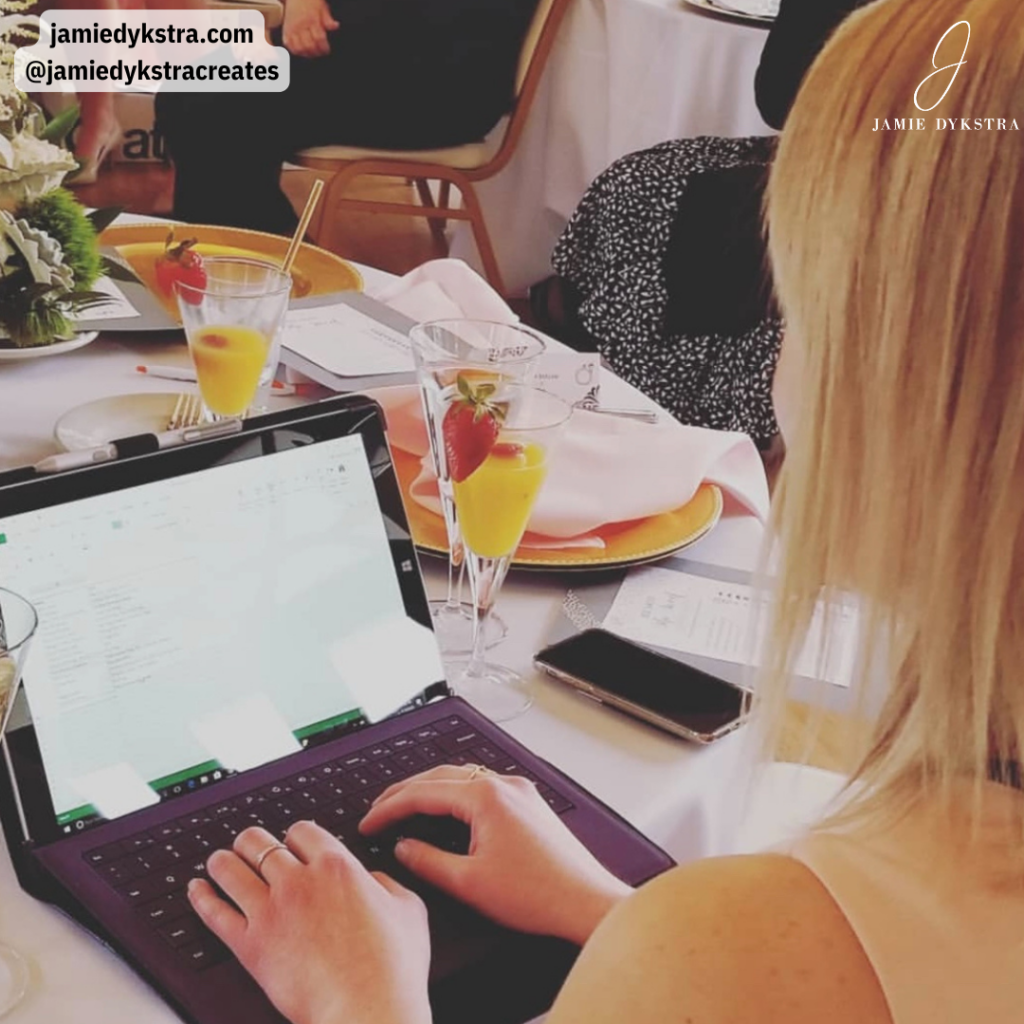
(P.S. If you’re wondering about all the drinks in the photo… my note-taking skills also translate to bridal showers and beyond 😜)
Synthesizing large amounts of information
There’s a lot of information that gets covered by a lot of people throughout the course of a meeting. Writing meeting minutes requires succinctly and accurately summarizing the key thoughts, actions, and takeaways discussed in the meeting.
I won’t lie… the first few times I took meeting minutes, I basically wrote those puppies out word for word (which was a challenge without recording or AI…). I struggled to pick out what was important and wasn’t sure how to summarize the discussion without losing the essence of it. After turning my first set in, I received some patient feedback on what to strive for.
I was soon able to effectively summarize a significant amount of information from the course of a jam-packed meeting in a page or two. Doing this required being able to pull out key themes, topics, decisions, and takeaways and write them in a way that someone could quickly reference later without losing any of the flavor of what was covered.
When helping an author write a book, this is a crucial skill. After interviewing the author, I’m now able to more easily translate the conversation with the author into clear and succinct thoughts on the page. This skill from my past has helped me to keep the content organized, clear, and complete without needing to state verbatim what their thoughts are on the topic.
Accurate representations
When drafting meeting minutes, it’s critically important to accurately represent the participation of each member of the meeting. Being selective in word choice to accurately capture, yet summarize, the essence of what was discussed and agreed to was crucial.
As you can imagine, this skill is just as important when helping an author write their book. If I don’t accurately represent their thoughts and ideas, the book is no longer their own. The ability to correctly translate the essence of their thoughts to the page ensures that valid information is being shared and is creating maximum impact.
Ghostwritten books actually take this concept to a whole different level because, not only do the thoughts need to be accurately captured, but they need to be captured in a way that feels like the author is actually typing the words themselves.
Efficiently utilizing notes
Back in my day, we didn’t have AI-driven software to generate transcripts and meeting summaries. I was the software. I was furiously scribbling notes during the meetings whenever I wasn’t speaking.
Then, when typing the meeting minutes, I had to be able to efficiently look through my old notes and translate what happened in the meeting in a polished way to the final meeting minutes. Being able to take the notes that were taken live in the meeting and pull out common threads in an organized way was also a skill I developed. Meetings often jump around… not confusing the reader is key.
Fortunately, we now have AI-software to generate transcripts and meeting notes for us. While I didn’t mind taking meeting minutes, I’d prefer to use my talents writing books. Although the form of the notes has changed, the skills needed to efficiently organize the notes into cohesive and clear thoughts on a page haven’t changed.
Just as meetings can jump around, an author will often jump around during an interview. As they speak, they get going on a story and then have a spark of inspiration. As a ghostwriter, I like to allow this free-thinking because the hidden gems are often found here. Being able to pull the themes from disparate parts of our conversations or even across multiple conversations is key to a successful book.
If you’d like to see my upscaled meeting minutes skills in action for your own book, let’s chat! Book a free 30-minute strategy session using the button below and let me help make your dream a reality!
Disclaimer: This blog should not be construed as providing, or intending to provide professional financial, legal, psychological, or other professional advice. It is simply meant to share my experiences with those who may find them relatable and helpful.